
The Model
Productive-Asset-as-a-Service
Rather than lending to farmers to acquire equipment they cannot maintain, AgAssetCo owns the assets centrally and delivers processing capacity as a metered, pay-as-you-go service through shared, solar-anchored hubs.
Hub architecture
A modular 450m² processing facility
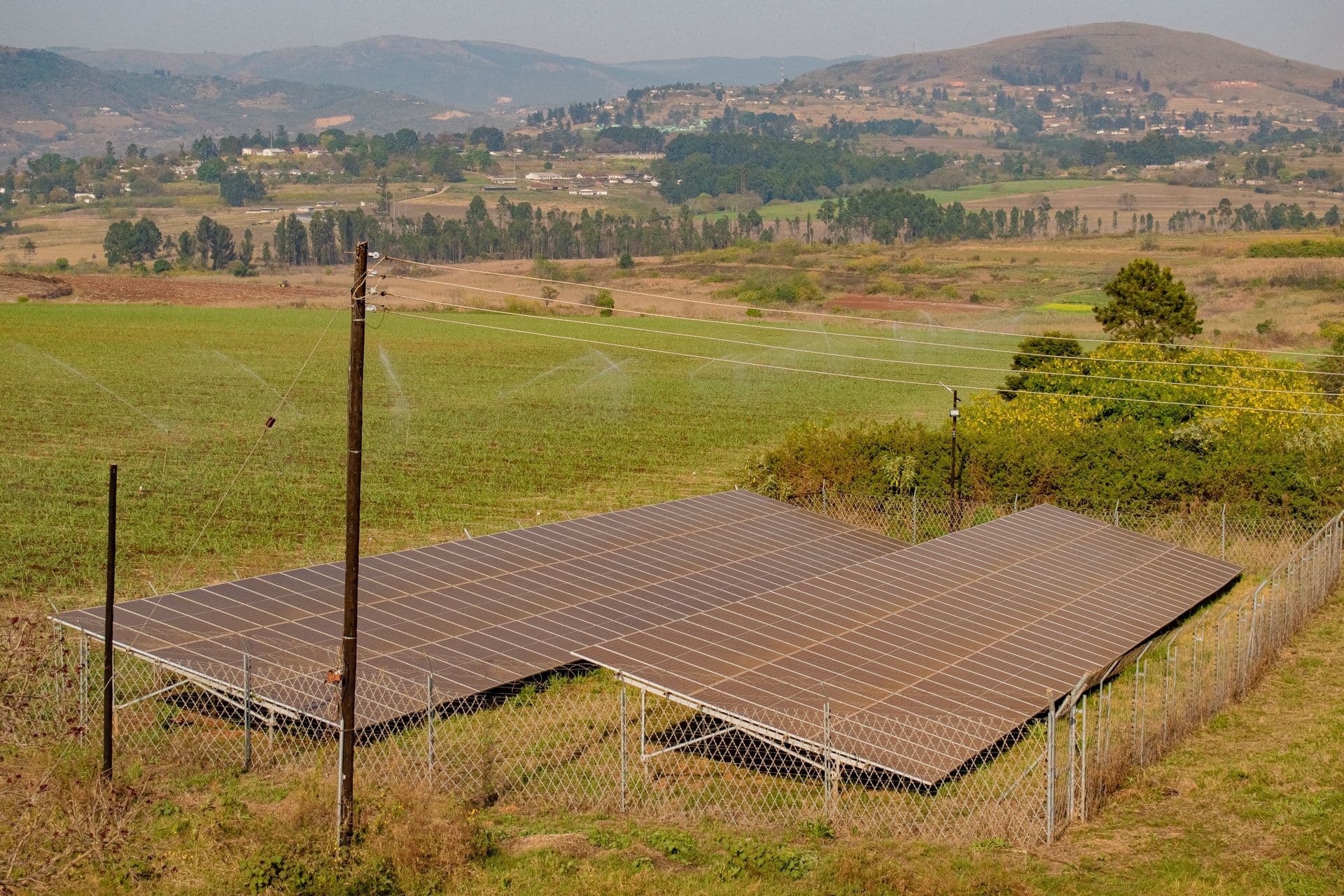
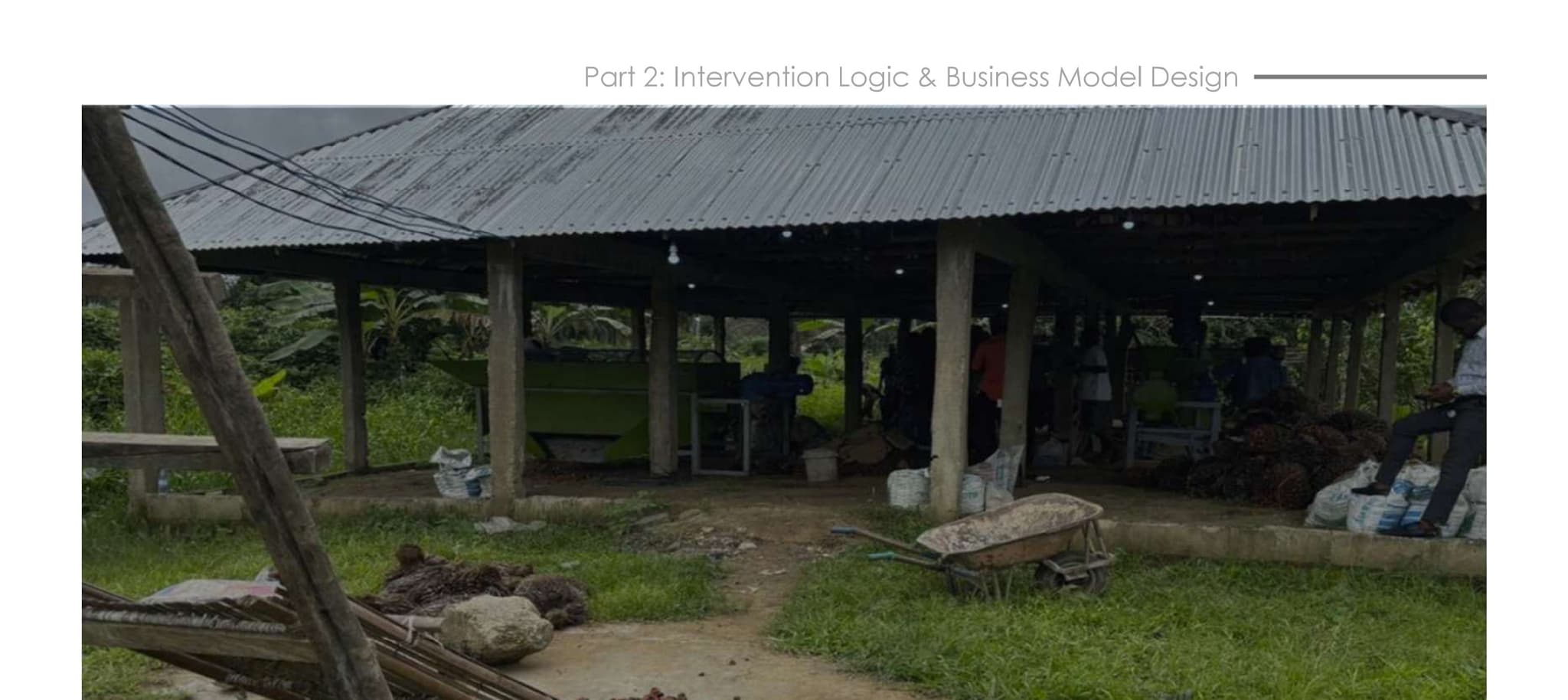
Each AgAssetCo hub is a modular 450m² processing facility: a roofed processing shed with integrated productive-use equipment, powered by a solar hybrid mini-grid. Hubs serve multiple processors within a defined catchment, aggregating individually-insufficient demand into stable, predictable throughput profiles that make the facility commercially viable.
Revenue comes from pay-as-you-go processing fees, metered and billed via mobile money, together with structured equipment lease fees. It is a model built around actual usage, not fixed lending obligations.
Energy as a contracted input
AgAssetCo does not own the power system
A dedicated energy Developer finances, owns, and operates the solar hybrid mini-grid under a long-term Power Purchase Agreement (PPA), under a DREEF-standardized Energy-as-a-Service framework. AgAssetCo procures that energy as a contracted input, keeping generation off its own balance sheet.
This structural separation is what lets AgAssetCo occupy a position no existing actor holds: mini-grid developers cannot own processing equipment, equipment suppliers cannot absorb technical risk or structure rural revenue, and microfinance institutions cannot take agricultural income risk. AgAssetCo does all three.
Site selection
Surveying the agriculture-energy landscape
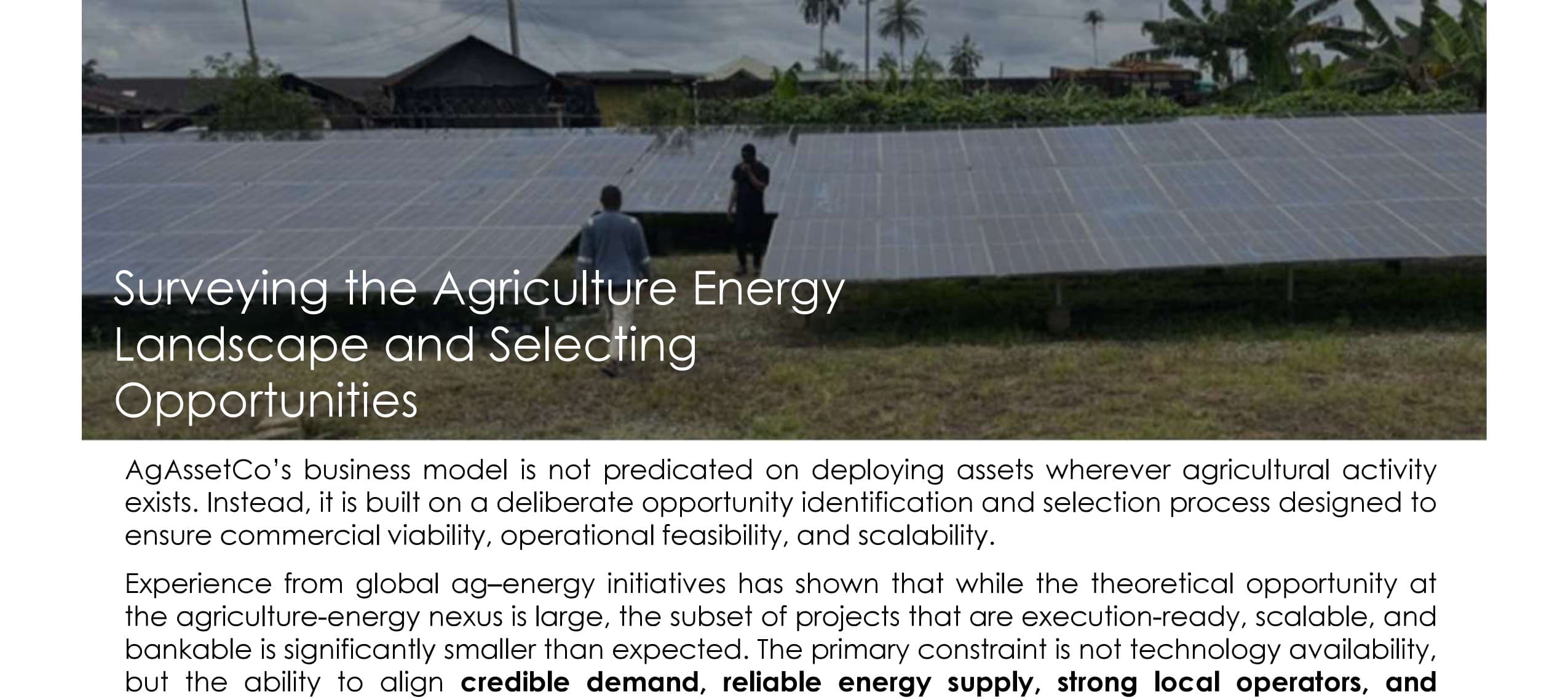
AgAssetCo’s field team assesses demand, operator quality, and site readiness before a hub is ever deployed, applying strict selection criteria rather than building wherever agricultural activity exists.
Intervention logic
Three design principles
Finance Productivity, Not People
AgAssetCo rejects borrower-led risk; it finances and owns productive assets directly, deploying them as shared infrastructure and monetizing actual usage rather than lending to individual farmers.
Aggregate Demand to Achieve Commercial Viability
Fragmented rural processing demand is aggregated via hub-based infrastructure into stable throughput profiles that support commercial operations.
Treat Energy as a Contracted Input, Not a Balance Sheet Commitment
AgAssetCo procures energy as a contracted input via long-term Power Purchase Agreements with specialist energy Developers, rather than owning generation itself.
The proof · Ele-Uma, Rivers State
A formal infrastructure test, not a grant-based intervention
AgAssetCo’s first deployment was an oil palm processing hub at Ele-Uma, Rivers State. It was structured from the outset as a test of the underlying infrastructure thesis, not a subsidized pilot. During peak harvest periods, the hub recorded a 5x increase in daily throughput compared with the diesel-powered baseline, alongside a roughly 60% reduction in energy costs. Processing cycles shortened, mechanical downtime fell, and smallholder farmers who previously sold through intermediaries gained direct processing access, contributing to a decline in post-harvest losses.
The operator reported no difficulty placing additional processed oil into the market: 100% of output was monetised.
“The hypothesis was confirmed: reliable energy plus owned productive assets equals bankable cash flow.”
See it in action
See the hubs replicating this model today
From Ele-Uma, AgAssetCo is replicating the validated model into cassava, grain, and bioenergy hubs across four Nigerian states.
View our pipeline